Firms aligned with the focus of bnaconsulting.co.uk support businesses in navigating transformation, managing risk, and turning information into actionable strategy. At the same time, digital gaming ecosystems and platforms such as https://plinkomobile.com/ demonstrate how modern systems are designed around probabilities, user behavior, feedback loops, and continuous optimization. While consulting and gaming operate in different domains, they increasingly share a common foundation rooted in digital technology, systems thinking, and decision-making under uncertainty.
This article explores how game logic, digital tools, and gaming culture offer valuable insights into contemporary consulting practice—and why understanding these connections is becoming essential for leaders and advisors alike.
Consulting as a System, Not a Single Recommendation
Modern consulting no longer revolves around producing a single report or recommendation. Instead, it focuses on understanding organizations as interconnected systems composed of people, processes, technologies, and external forces.
In these systems:
-
decisions interact with one another over time
-
small changes can create large downstream effects
-
uncertainty is unavoidable
-
feedback is essential for learning
This systemic perspective mirrors the structure of digital games, where outcomes are shaped not by one action, but by the cumulative effect of many interrelated decisions.
Digital Games as Models of Strategic Environments
Digital games are essentially controlled simulations. They create environments governed by rules, constraints, and probabilities, allowing players to experiment with strategies and observe outcomes.
From a consulting perspective, games offer a simplified but powerful analogy for business environments:
-
markets resemble competitive game spaces
-
regulations act as rule sets
-
resources mirror limited in-game assets
-
competitors function as other players
Understanding this parallel helps consultants explain complex strategic concepts in an accessible way.
The Role of Digital Technology in Modern Consulting
Digital technology has transformed consulting practice at every level. Advanced analytics, cloud platforms, AI-driven insights, and real-time dashboards allow consultants to move beyond intuition toward evidence-based strategy.
Key technological enablers in consulting include:
-
data aggregation and visualization tools
-
predictive analytics and scenario modeling
-
automation of repetitive analysis
-
collaborative digital workspaces
These technologies play a role similar to game engines in gaming: they process vast amounts of data behind the scenes while presenting clear, actionable outputs to users.
Decision-Making Under Uncertainty: A Shared Challenge
One of the strongest connections between gaming and consulting lies in decision-making under uncertainty. In consulting, perfect information is rare. Data may be incomplete, markets volatile, and human behavior unpredictable.
Games are intentionally designed around uncertainty:
-
probabilities influence outcomes
-
hidden variables affect results
-
players must act without knowing the full picture
The lesson for consulting is clear: effective strategy is not about eliminating uncertainty, but about managing it intelligently.
Risk Management as a Core Principle
Risk management is central to strategic consulting. Organizations must balance growth opportunities against financial, operational, and reputational risks.
In games, risk is simulated, but the logic is similar. Players constantly weigh potential rewards against possible losses. Overly cautious play leads to stagnation; reckless play leads to failure.
This balance teaches a valuable consulting lesson:
sustainable success requires calculated risk, not risk avoidance.
Feedback Loops and Continuous Strategy
Traditional consulting often relied on periodic reviews. Today, digital tools enable continuous feedback, transforming strategy into an iterative process.
In consulting, feedback comes from:
-
key performance indicators (KPIs)
-
financial and operational metrics
-
customer and employee responses
In games, feedback is immediate and visible—scores, progress bars, and outcomes inform the next move.
Both environments demonstrate that learning happens through feedback, not static planning.
Structural Comparison: Consulting Systems and Digital Games
| Dimension |
Strategic Consulting |
Digital Games |
| System |
Organizations and markets |
Game worlds and engines |
| Rules |
Regulations and policies |
Game mechanics |
| Data |
Financial and operational metrics |
Player actions and probabilities |
| Feedback |
Dashboards and reports |
Scores and progression |
| Objective |
Sustainable performance |
Progress and mastery |
This comparison highlights how similar the underlying logic is, even when the context differs.
Gamification in Business and Consulting
Gamification—the application of game elements to non-game contexts—has gained traction in business strategy, change management, and consulting-led transformations.
In consulting, gamification is used to:
-
increase employee engagement
-
encourage desired behaviors
-
make abstract goals tangible
When designed responsibly, gamification leverages human motivation without oversimplifying complex realities.
Two Ways Game Logic Enhances Consulting Thinking
-
Systems awareness: Games reinforce the idea that outcomes emerge from interactions between multiple variables, helping leaders avoid linear thinking.
-
Iteration and learning: Games normalize failure as part of progress, encouraging organizations to test, learn, and adapt rather than fear mistakes.
These principles align closely with modern agile and adaptive consulting methodologies.
Data Interpretation and Strategic Judgment
Digital tools provide data, but data alone does not create strategy. Interpretation, context, and judgment remain human responsibilities.
Consultants must decide:
Similarly, players must interpret in-game information and decide how much risk to take. Technology informs decisions, but does not replace accountability.
Digital Transformation as Cultural Change
Digital transformation is not just technical—it is cultural. Organizations must learn to trust data, collaborate digitally, and embrace continuous change.
Games offer insight into successful transformation:
-
intuitive interfaces speed adoption
-
clear objectives reduce resistance
-
immediate feedback builds confidence
Consultants apply these lessons to help organizations adopt new technologies effectively.
Simulation and Scenario Planning
Scenario planning is a core consulting tool, allowing organizations to explore possible futures before committing resources.
Games are built entirely on simulation. Players explore “what-if” scenarios within defined boundaries. Consulting uses similar logic, but with real-world consequences.
Simulation reduces uncertainty by making risks visible before they materialize.
Ethics, Transparency, and Trust in Digital Systems
As consulting becomes more data-driven, ethical considerations grow in importance. Models influence decisions that affect people, jobs, and communities.
Responsible consulting requires:
-
transparency in assumptions
-
explainable analytical models
-
clear communication of limitations
Games face similar trust challenges: when players believe systems are fair, engagement increases. In business, trust underpins long-term success.
Cognitive Load and Strategic Focus
Digital environments can overwhelm decision-makers with information. Both consultants and gamers must manage cognitive load to maintain performance.
Effective strategies include:
More data does not automatically lead to better decisions—clarity does.
Human Skills in a Digital Consulting World
Despite technological advances, certain skills remain uniquely human and increasingly valuable:
These skills cannot be automated, just as games require human players to create meaning from systems.
Long-Term Value Versus Short-Term Wins
Strategic consulting emphasizes long-term value creation over short-term gains. Quick wins that undermine sustainability are rarely desirable.
Games reinforce this lesson: consistent mastery over time matters more than isolated victories. Strategic patience often outperforms impulsive action.
Responsible Use of Digital Decision Tools
Digital tools are powerful but can create false confidence if misused. Responsible consulting involves:
Predictive tools can inform decisions, but they do not guarantee outcomes.
The Future: Convergence of Analytics and Simulation
The future of consulting will likely involve deeper integration of:
These tools will allow organizations to explore strategies dynamically. Games have pioneered these techniques, offering a blueprint for professional applications.
Strategic Balance in a Digital Era
Leaders today must balance competing priorities:
Consultants help navigate these trade-offs, ensuring technology serves strategy rather than dictating it.
Conclusion
Strategic consulting, digital gaming, and modern technology share more than superficial similarities. All are built on systems, rules, feedback, and human decision-making. Firms aligned with the focus of bnaconsulting.co.uk operate in this complex landscape, helping organizations transform uncertainty into informed strategy.
Digital games and platforms like plinko illustrate these principles in a virtual environment, making them easier to understand and apply. By recognizing the shared logic between consulting and gaming, leaders gain a clearer perspective on risk, adaptation, and long-term value creation.

 10 Box Mega Bundle! Nintendo Brand Titles Only
$95.20
10 Box Mega Bundle! Nintendo Brand Titles Only
$95.20
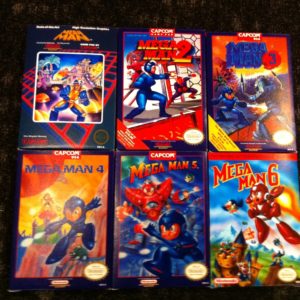 Mega Man 1-6 bundle
$54.00
Mega Man 1-6 bundle
$54.00