A well-designed retro gaming shelf is more than storage—it is a visual system that highlights nostalgia, preserves condition, and reflects the identity of the collector. Old cartridges, manuals, and reproduction boxes deserve structured placement so they remain protected while also forming a cohesive display. The goal is to combine practicality with presentation, ensuring every item is both accessible and visually meaningful.
Structure and Zoning of the Collection
The foundation of an ideal shelf is clear zoning. Instead of random placement, divide the collection by systems, generations, or franchises. NES, SNES, and Game Boy titles should occupy distinct sections so the viewer immediately understands the structure. This approach eliminates visual chaos and creates a logical flow across the shelf. Vertical alignment works best for boxed items, while horizontal stacking can be used for cartridges if space is limited. The consistency of arrangement matters more than density; overcrowding reduces both aesthetics and usability.
Comment by Polish retro gaming expert Tomasz Kowalczyk:
“Dobrze podzielona kolekcja działa jak przemyślana przestrzeń użytkownika — podobnie jak na platformie gamingowej slottica kasyno, gdzie każde element ma swoje miejsce i prowadzi odbiorcę intuicyjnie przez całość bez wizualnego chaosu.”
Role of Boxes in Visual Identity
Boxes define the shelf’s visual impact. Loose cartridges appear fragmented, while boxed editions form a coherent picture. High-quality reproduction boxes help restore that effect, especially for games originally missing packaging. Matching sizes, authentic colors, and consistent materials give the illusion of a complete set, even if part of it is reconstructed. When aligned tightly, boxes create a clean “wall” effect that becomes the focal point of the display.
Balance Between Original and Reproduction Items
Mixing original and reproduction packaging requires careful balance. Originals should take priority in central or eye-level zones, while reproductions fill gaps without breaking the visual continuity. The key is not to hide replicas, but to integrate them seamlessly so the collection appears complete rather than patched together. A uniform orientation—spines facing outward, identical spacing—helps achieve that effect.
Protection and Material Considerations
Preservation is as important as presentation. Retro materials—cardboard, paper inserts, plastic cartridges—are vulnerable to light, humidity, and dust. Shelving should be placed away from direct sunlight, and preferably in a stable, dry environment. Acrylic protectors for rare boxes can prevent wear without compromising visibility. Clean surfaces and minimal handling significantly extend the life of both original and reproduction packaging.
Practical Layout Rules
An effective shelf combines aesthetics with usability. The collection should be easy to browse and maintain. A few simple principles ensure consistency:
- Keep frequently used games within reach zones
- Arrange by size to avoid uneven visual lines
- Use neutral shelving colors to highlight artwork
- Leave small gaps between sections for readability
- Avoid stacking more than two layers to prevent damage
These rules reduce clutter and allow each item to stand out without overwhelming the viewer.
Lighting and Display Emphasis
Lighting shapes how the collection is perceived. Soft, indirect LED lighting enhances colors without damaging materials. Warm light emphasizes nostalgia, while neutral white provides a cleaner, archival look. The placement should highlight key titles or rare pieces rather than flood the entire shelf. Controlled illumination draws attention and adds depth without turning the shelf into a distraction.
Conclusion: Function Meets Presentation
An ideal retro gaming shelf is not a random set of items, but a well-thought-out system. Proper zoning, consistent use of boxes, careful protection, and controlled lighting transform a simple collection into a structured display. The result is a space where each game feels intentional, the shelf looks complete, and the collector gains both visual satisfaction and long-term preservation of their library.

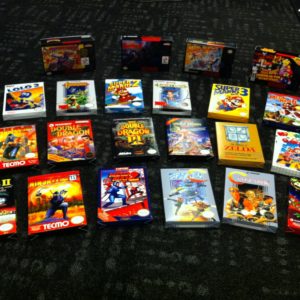 10 Box Mega Bundle! Nintendo Brand Titles Only
$95.20
10 Box Mega Bundle! Nintendo Brand Titles Only
$95.20
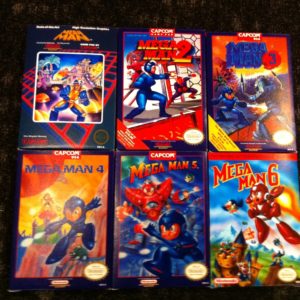 Mega Man 1-6 bundle
$54.00
Mega Man 1-6 bundle
$54.00