Collectors often underestimate how strongly packaging influences the perception of a video game. A loose cartridge on a shelf and the same game placed inside a well-crafted box are perceived as entirely different objects. The difference is not only visual — it affects emotional value, perceived rarity, and even how seriously the owner treats the collection. Looking at real before-and-after scenarios reveals how packaging reshapes the identity of a game.
From Loose Cartridge to Complete Display Piece
A cartridge without a box feels incomplete, even if the game itself works perfectly. It looks like a fragment rather than a finished product. Once placed in a box that replicates original artwork and proportions, the same item becomes part of a cohesive display. The perception shifts from “just a game” to “a collectible unit.” Shelving also changes: instead of stacking cartridges, collectors begin organizing titles by spine art, creating a visually consistent lineup.
According to German retro gaming specialist Markus Reinhardt: “Eine lose Cartridge wirkt isoliert und unbedeutend, doch mit der richtigen Verpackung entsteht sofort ein Gefühl von Vollständigkeit und Ordnung — ein Prinzip, das man auch auf einer Gaming-Seite wie die Gaming-Plattform https://gamblezen-de.de/ erkennt, wo Präsentation entscheidend dafür ist, wie Inhalte wahrgenommen werden.”
Visual hierarchy and shelf impact
Before adding boxes, collections usually lack structure. Cartridges vary in size, color, and orientation, which creates visual noise. After boxing, uniformity emerges. The eye reads the collection as a series of titles rather than scattered objects. This directly impacts how others perceive the collection: it starts resembling a curated library rather than storage.
Key visual differences include:
- Aligned spines that allow quick identification of titles
- Consistent dimensions that create order on shelves
- Artwork that adds color and personality to the display
- Clear separation between games instead of visual clutter
Emotional perception and attachment
The presence of a box evokes nostalgia more strongly than a standalone cartridge. Artwork, logos, and design elements reconnect players with the original retail experience — the moment of purchase, browsing in stores, or receiving a game as a gift. Before boxing, the emotional connection is tied mainly to gameplay. After boxing, the object itself starts carrying memory value.
Perceived value and completeness
Collectors instinctively associate boxed games with higher value, even when the box is a reproduction. A loose cartridge suggests something missing; a boxed game signals completeness. This psychological shift influences how owners display, store, and even talk about their games. A boxed copy is shown, discussed, and photographed. A loose cartridge is often hidden or overlooked.
Transformation of the collection identity
When multiple games are boxed, the transformation becomes cumulative. What was previously a pile of items turns into a themed collection. The owner begins to think in terms of sets, franchises, and visual balance. This change affects behavior: collectors start planning acquisitions more strategically, aiming to fill visual gaps rather than just obtain playable titles.
Conclusion
The shift from unboxed to boxed games is not cosmetic — it alters perception on multiple levels. Visual structure replaces chaos, emotional attachment deepens, and perceived value increases. A simple addition of a box turns a functional object into a display-worthy collectible. In practice, the “after” state is not about packaging alone, but about redefining what the collection represents.

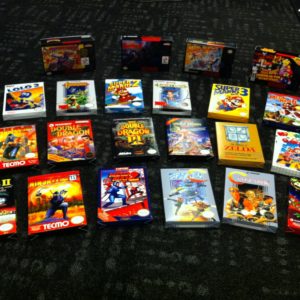 10 Box Mega Bundle! Nintendo Brand Titles Only
$95.20
10 Box Mega Bundle! Nintendo Brand Titles Only
$95.20
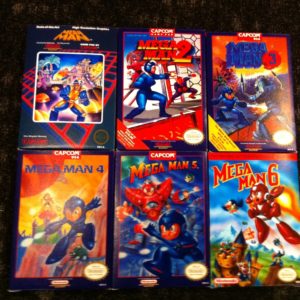 Mega Man 1-6 bundle
$54.00
Mega Man 1-6 bundle
$54.00