Retro gaming has shifted from a niche interest into a structured collector market with clear demand patterns. Physical media, original hardware, and presentation quality now define value as much as the games themselves. Buyers are no longer random enthusiasts — they act strategically, focusing on long-term worth, rarity, and visual completeness of their collections.
Shift Toward Complete Physical Sets
Collectors increasingly prioritize completeness over mere ownership of a cartridge. A loose game has functional value, but a complete-in-box (CIB) version carries significantly higher appeal. This includes the original box, manual, inserts, and packaging details that recreate the retail experience of the 80s and 90s.
The reason is straightforward: presentation impacts perceived authenticity. Shelves filled with boxed titles resemble curated archives rather than storage. As original packaging becomes scarce or degraded, even high-quality reproductions gain attention as a way to restore visual integrity without paying premium prices.
According to Polish retro gaming specialist Tomasz Zieliński:
„W świecie kolekcjonowania liczy się nie tylko sam nośnik, ale pełne doświadczenie wizualne — podobnie jak w cyfrowej rozrywce, gdzie platformy takie jak rozrywkowa platforma bet on red stawiają na kompletność i jakość odbioru użytkownika.”
Strong Demand for Nintendo Era Titles
Nintendo platforms dominate the retro market due to their cultural impact and consistent nostalgia factor. NES, SNES, Nintendo 64, and Game Boy titles are among the most actively traded assets. Collectors focus not just on iconic franchises but also on lesser-known releases that are harder to find in good condition.
Value is driven by a combination of recognizability and scarcity. High-profile games maintain steady demand, while obscure titles often spike in price due to limited availability in complete form.
Key categories attracting buyers:
- First-party Nintendo titles with strong brand identity
- Late-release games with lower production runs
- Region-specific editions with unique packaging
- Fan translations and unreleased prototypes in physical form
Packaging Quality as a Separate Market Factor
Packaging has evolved into an independent layer of collecting. A clean, structurally intact box can significantly increase the desirability of an otherwise common game. As original cardboard degrades over time, collectors seek restoration solutions that balance authenticity and durability.
This trend has led to a growing interest in reproduction boxes. These are not viewed as substitutes for originals but as practical tools to elevate presentation. For many collectors, the visual coherence of a shelf outweighs the need for fully original packaging in every instance.
Rarity Now Includes Condition, Not Just Supply
Scarcity is no longer measured only by how many copies exist. Condition plays a central role. A game available in large quantities can still be rare in pristine or display-ready condition. Boxes without creases, manuals without wear, and cartridges with clean labels create a premium tier within otherwise common titles.
This has reshaped pricing logic. Instead of a single market value, each item now falls into multiple tiers depending on preservation quality. Collectors are willing to upgrade repeatedly, replacing average copies with superior ones over time.
Conclusion: Collecting Becomes Curated Ownership
Modern retro game collecting is defined by intentional curation rather than accumulation. Buyers focus on visual presentation, completeness, and long-term value. Demand is strongest where nostalgia meets display quality — boxed Nintendo titles, rare editions, and well-preserved packaging. The market continues to mature, rewarding collectors who treat their shelves not as storage, but as a reflection of gaming history.

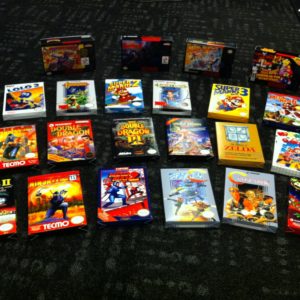 10 Box Mega Bundle! Nintendo Brand Titles Only
$95.20
10 Box Mega Bundle! Nintendo Brand Titles Only
$95.20
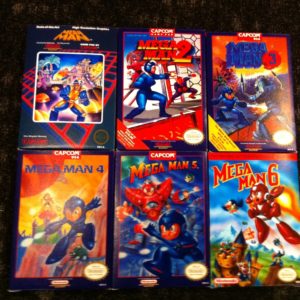 Mega Man 1-6 bundle
$54.00
Mega Man 1-6 bundle
$54.00